
My tractor isn’t your prom dress
Respecting and possibly romanticising the parallel lives of farmers

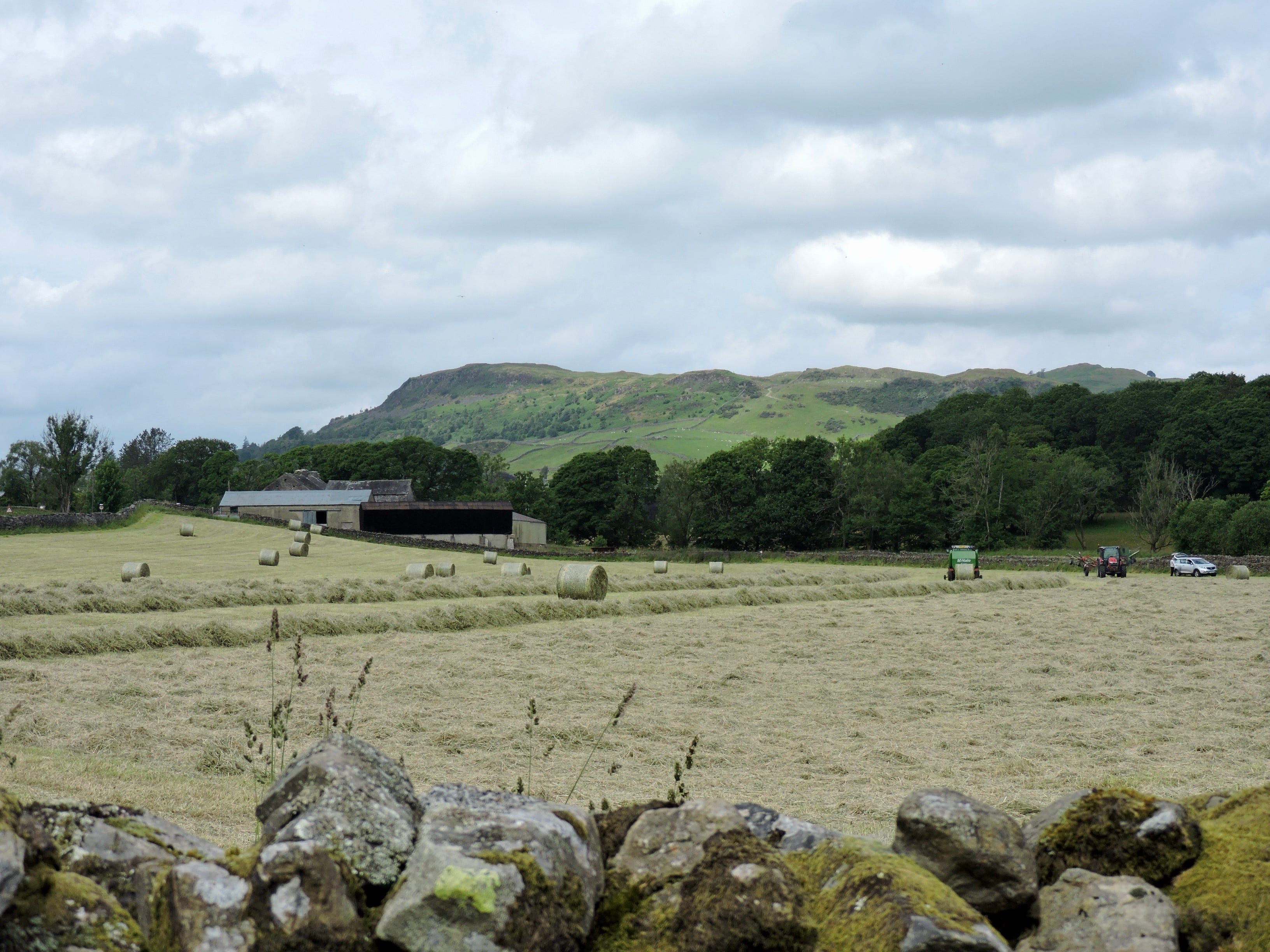
As boys with dogs who were keen on trespassing, my friends and I were wary of farmers aged from around 7–14, but then you grow up and things change. At the Westmorland County Show this year and being among a thousand Cumbrian farmers, my wife and I had a strange, impossible, ludicrous yearning to be part of their tribe.
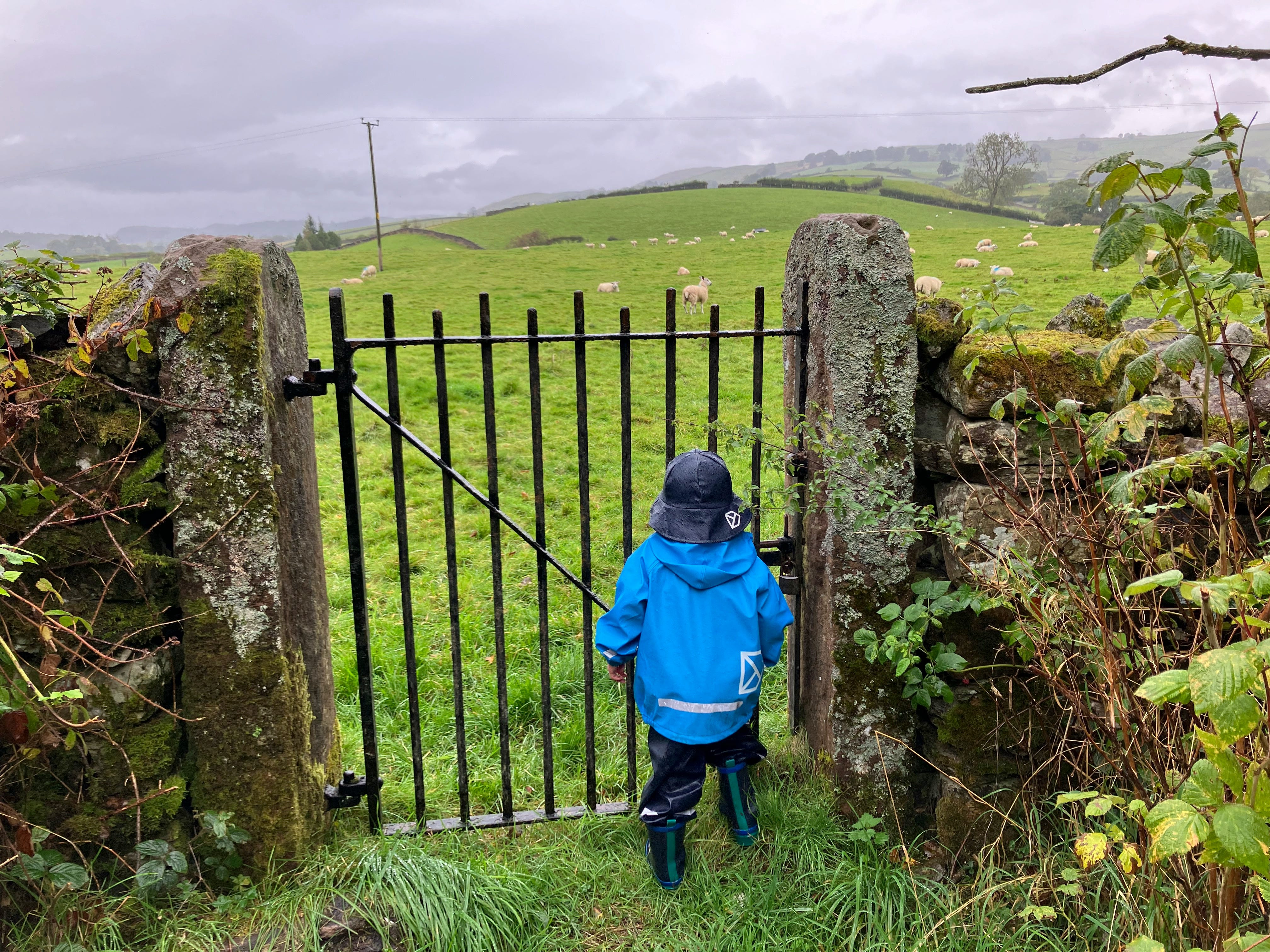
We live among farms and farmers, there are probably a dozen small or medium size working farms within a few miles of us; the fields opposite our house are pasture for sheep.1 We walk through a farm to get to my three-year-old son’s school.
Recently the farmer stopped us and pressed a freshly laid hen’s egg into my son’s hand, who then carried it carefully for the best part of a mile to school. In the spring the same farmer had taken him aside to show him a blackbird nest in the engine case of one of his elderly tractors. Walking home from the school carol service with all the family, he put some coins into my son’s jacket pocket for Christmas, and gave me some for my one-year-old daughter, for being “bonny”. (She’d smiled at him.) My son loves tractors and is about the same age as the farmer’s grandson, and the way he carried his gift egg away as if it were the Olympic torch amused and touched him.
Having children changed things. Walking the lanes, tractors and farm buggies drive past with particular care (mostly) and the drivers often give us a thumbs-up or wave, occasionally bibbing the horn or flashing the lights; sometimes you can see them (and not infrequently passengers, usually obvious family) smiling at the bairns, especially when they’re out in their foul weather gear. For my part, I’m more rooted; my outlook is no longer so much that of a nomadic pillager who’d rather drive off cattle for plunder than herd them.
Two things have struck me living among farms as we do, more than when I grew up in nearby Windermere.
The first is how family oriented and child friendly farmers are. I know this isn’t a revelation but I feel it more now. Seeing two or often three generations out working, doing the hay gathering or whatnot, riding in their farm buggies with the dogs, etc, they generally look happy with, or at least absorbed in, life. I think differently now about my classmates who milked cows before school years ago and wonder what it would’ve been like for me.
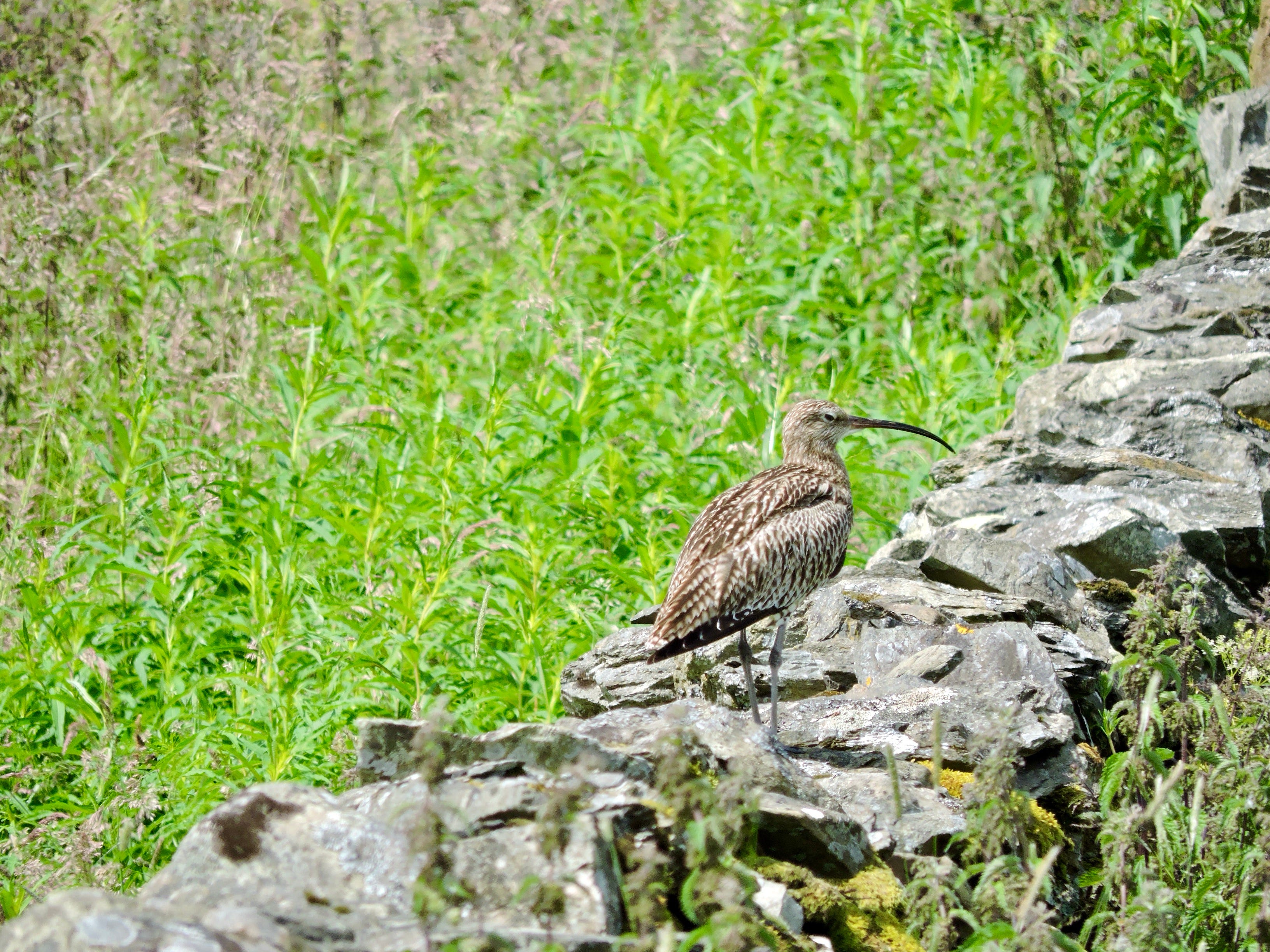
There’s a mating pair of rare, endangered curlews who nest in the field opposite us every year and the farmer waits for the signal that all the fledglings have gone before he does the hay. This year the farmers, their children and grandchildren came to do it together and to look at the abandoned nest.
Which brings me to the second thing: how much some of the farmers know about and love wild nature. I even got into a conversation with a retired farmer (also a rarity; there aren’t many retired farmers about) who was watching one of the curlews, which was perched on a wall as it often was, with amazement, having chanced to take a walk here. He started chatting to me, a stranger, about his experiences with ground-nesting birds as a boy farming nearby fields. He was in his seventies (it turned out he went to school with a neighbour) but he was talking like a boy. Others have jawed away about all the different creatures and their habits in a way that went far beyond any professional curiosity or utility.
If you think I am revealing an absurdly romanticised view of farming and farmers, based on some trivial personal experiences, you’re half right. I don’t think farmers are some sort of elves who scatter children with magic dust and spread rainbows from their twinkling tractors. They don’t dance through their fields in the moonlight followed by trains of enchanted woodland creatures. Some might even be morose, unsmiling, inclined to leave decaying refuse on their land, do half a job or worse on repairs, surreptitiously close off rights of way, graze bulls by paths, and generally be unlikely to diffuse light or warmth. And yet—
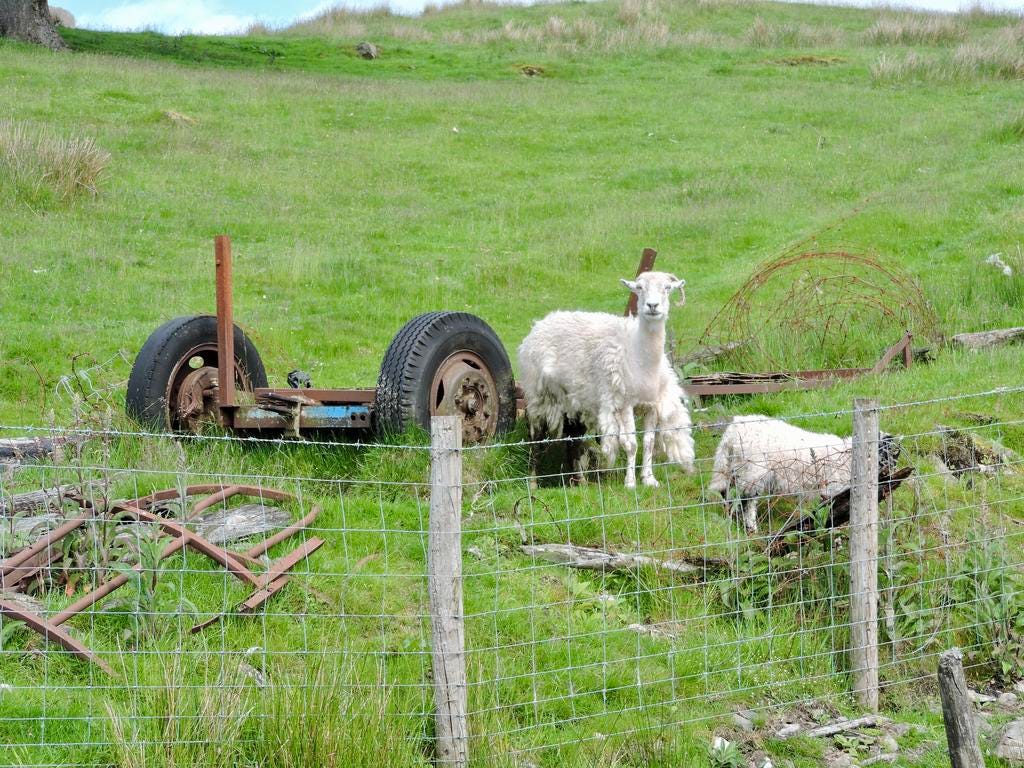
There’s a specialness about farming and those who farm, even where it’s not a good specialness. There are these strange, ancient-seeming people whose lives overlap with but are unlike our own; who are everywhere seen in motion, always working; who seldom speak more than a few words to strangers, if any, and from whom friendliness feels like a gift; whose lives are under the influence of the weather and the seasons, like people as astrologers imagine them, shaped by the movements of the planets; whose wisdom and craft are deeply felt as woven into the fabric of their daily lives and aren’t just in their heads but in their hands and in their chests, and can only really be communicated by shared experience, most commonly within a family and over a lifetime. There’s something secret, or at least unknown, about them, though they’re in plain sight.
More prosaically, I think about the way Liz Hurley calls non-celebrities ‘civilians’; it’s always felt to me that we’re all civvies to farmers, either in the way of their work or not, and judged primarily according to that. They’re in a deep relationship with the land and we’re just passing through.
To know fully even one field or one land is a lifetime’s experience. In the world of poetic experience it is depth that counts, not width. A gap in a hedge, a smooth rock surfacing a narrow lane, a view of a woody meadow, the stream at the junction of four small fields—these are as much as a man can fully experience. (Irish farmer–poet, Patrick Kavanagh, The Parish and the Universe)
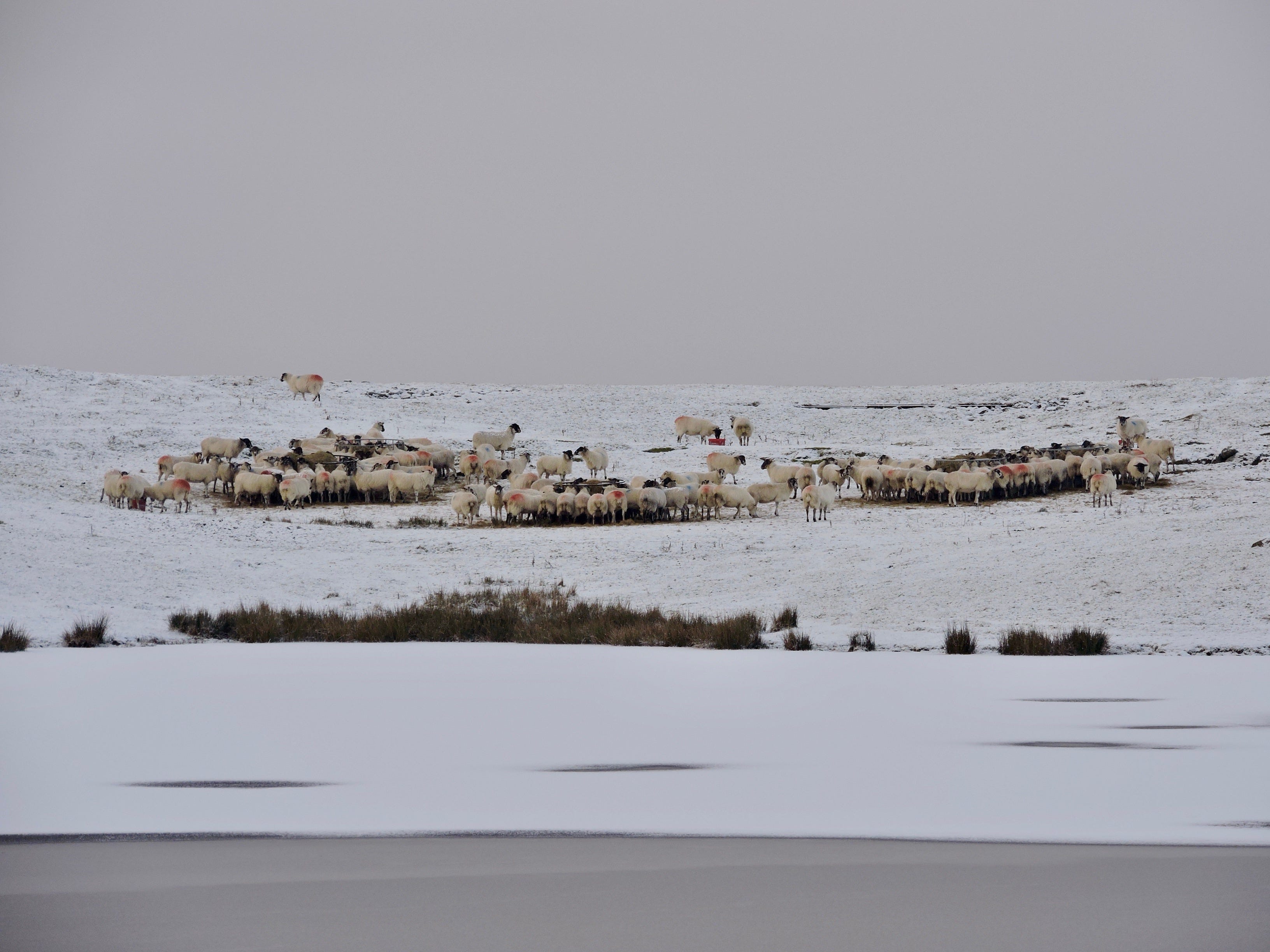
No doubt some non-farmers resent being civvies in someone else’s world; others blame farmers for not being productive enough, or for being reliant on subsidies (“always have their hands out for grants”) and not economically savvy, or for being environmentally destructive, or for not being whatever it is that they think farmers should be.
But much of modern farming is not the result of choices made by those working the land; it has been shaped by outside forces, sometimes deliberately, other times not. There are the shifting interests, policies and priorities of the state (HM Government and formerly the EU); the supermarkets; manufacturers and suppliers;2 lobbyists, NGOs and special interest groups; and the changing face of nature itself.3
Because farmers are entangled in the broader human world whether they like it or not, this sometimes leads to them being assigned a political ‘side’ and celebrated or reviled accordingly. This seems to me to be almost a category error. I think of Fangorn and the ents in The Lord of the Rings:
I am not going to do anything with you: not if you mean by that ‘do something to you’ without your leave. We might do some things together. I don’t know about sides. I go my own way; but your way may go along with mine for a while.… I am not altogether on anybody’s side, because nobody is altogether on my side, if you understand me: nobody cares for the woods as I care for them…
I like Fangorn’s curious, old-fashioned-seeming, respectful understanding that others have their own perspectives, interests and lives. Sometimes our ways may go along for a while. My romanticisation of farmers may be ridiculous but possibly it’s healthier—and carries more truth—than viewing them solely as units to be disposed of in a SimCity world.4 Meanwhile, as Storm Éowyn blows angrily outside, some of my neighbours will be on the fells and in the fields, tending to their beasts.
Paul Fishman (Skelsmergh, January 2025)
When I talk about farming here I generally mean small to medium scale sheep and cattle (often hill) farming in Cumbria and nearby areas. There isn’t much arable farming in these parts.
Large-scale suppliers of agricultural materials and equipment are increasingly controlling; even some tractor manufacturers have become overbearing towards their customers (see e.g. here).
Farmers are under enormous pressure to do things in certain ways, often with conflicting incentives and penalties. They are treated as means to ends chosen by others. On the government side, political scientist and anthropologist James C Scott talked about a form of internal imperialism, “an imperial or hegemonic planning mentality that excludes the necessary role of local knowledge and know-how” (Seeing Like a State). He was explicitly not making a “blanket case against … bureaucratic planning”, while he also noted that “scientific farming, industrial agriculture, and capitalist markets in general” are as much agents of “homogenization, uniformity, grids, and heroic simplification” as the state.
Why not romanticise more trades and professions? Why not grocers?
“I can imagine what it must be to sit all day as you do surrounded with wares from all the ends of the earth, from strange seas that we have never sailed and strange forests that we could not even picture. No Eastern king ever had such argosies or such cargoes coming from the sunrise and the sunset, and Solomon in all his glory was not enriched like one of you. India is at your elbow,” he cried, lifting his voice and pointing his stick at a drawer of rice, the grocer making a movement of some alarm, “China is before you, Demerara is behind you, America is above your head, and at this very moment, like some old Spanish admiral, you hold Tunis in your hands…. Your dates may come from the tall palms of Barbary, your sugar from the strange islands of the tropics, your tea from the secret villages of the Empire of the Dragon. That this room might be furnished, forests may have been spoiled under the Southern Cross, and leviathans speared under the Polar Star. But you yourself—surely no inconsiderable treasure—you yourself, the brain that wields these vast interests—you yourself, at least, have grown to strength and wisdom between these grey houses and under this rainy sky.” (G K Chesterton, The Napoleon of Notting Hill)
Nice curlew. Plus you’ve managed to find possibly the only common ground between Mao Tse Tsung and Jeremy Clarkson.
This is my new favorite post. Although I have a difficult day ahead, it no longer feels so daunting. Sometimes reading here is akin to a great hot shower: I’m prepared to take on my world. Thank you, Paul!