
The people’s Paddington
Soft beyond measurement and twee beyond enduring

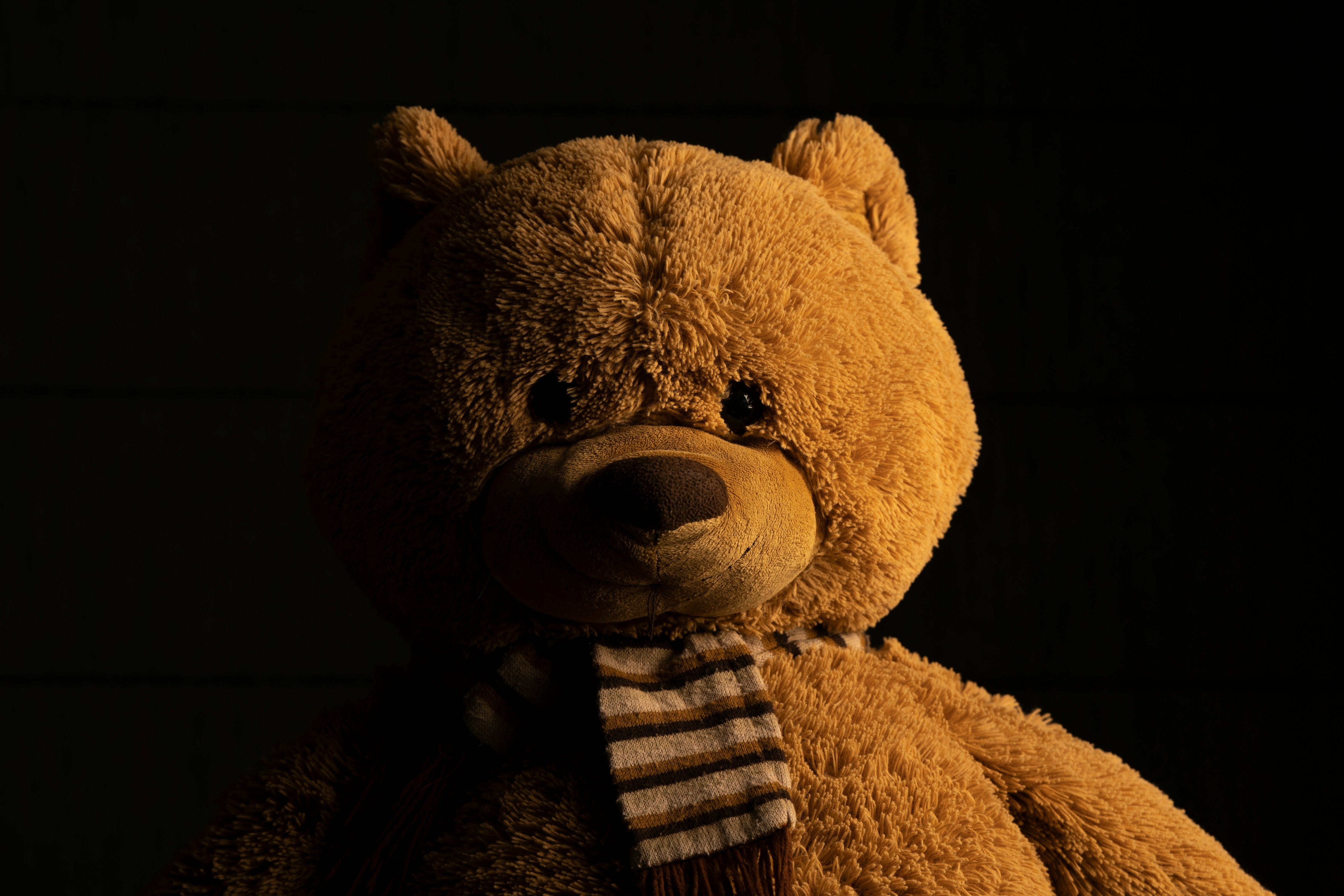
What Huxley teaches is that in the age of advanced technology, spiritual devastation is more likely to come from an enemy with a smiling face than from one whose countenance exudes suspicion and hate. In the Huxleyan prophecy, Big Brother does not watch us, by his choice. We watch him, by ours. (Neil Postman, Amusing Ourselves to Death)
Cruelty is invariably accompanied by sentimentality. It is the law of complementaries. (Aleksandr Solzhenitsyn, The Gulag Archipelago)
One way I amuse myself while trying to make sense of things is to run parts of life through a script.
A favourite is the fairy tale/1970s sci-fi script.
If AI were an apple in a fairy tale, should you eat it? Would creating simulacra of the dead work out well? If cybernetic implants were being pushed as a new wonder technology, would the Charlton Heston character go all in on them or resist? Would gain of function research on pathogenic viruses … have you seen The Omega Man? And so on and on.
There are some more specific scripts.
Choose and perish
There’s a moment towards the end of Ghostbusters (1984) where Gozer the Gozerian,1 having established that its adversaries aren’t gods, says—Choose and perish.
Gozer is the Sumerian god of destruction that looks like it might once have been a friend of David Bowie’s.
Choose and perish means that the ghostbusters get to pick the physical form that Gozer will take in our dimension to destroy us. One of them—What did you do, Ray?—can’t help thinking of the Stay Puft Marshmallow Man, who duly appears 100 feet high and full of fight. Thus will the world end, unless they can stop it somehow.
This may just have been the casual setup for the gag of the Marshmallow Man, but it feels as if there is somehow something true embedded in it, as in some myths.
Is there a sense in which individuals and civilisations sometimes choose implicitly the manner of their destruction?
I think so, and it’s likely to be some deep, inscrutable impulse, like Ray’s childhood memory of Stay Puft. Not something conscious, but something you can still be aware of at times.
So, this script becomes, what will we choose to perish by, and will we know we’ve done it?
I shall not be dark, but beautiful and terrible
There’s also a moment in The Lord of the Rings.
In Lothlórien, Frodo offers Galadriel the One Ring, the Ring of Power.
She responds:
In place of the Dark Lord you will set up a Queen! And I shall not be dark, but beautiful and terrible as the Morning and the Night! Fair as the Sea and the Sun and the Snow upon the Mountain! Dreadful as the Storm and the Lightning! Stronger than the foundations of the earth. All shall love me and despair!2
Galadriel refuses the ring, the temptation of (middle) earthly power, which seems like the point. But there’s more to it.
In offering the ring, Frodo said:
You are wise and fearless and fair, Lady Galadriel …. It is too great a matter for me.
In complement to the hunger for power there is a hunger for subjection; a desire not to be responsible, to be protected, to be provided for, to think there is some worldly power that will exercise our will for us with wisdom, justice and strength, with no effort from us, without troubling our judgement.
For some this will centre on an individual, but for others it will be impersonal institutions, systems, technologies, procedures, the law. Combining elements of both is the elevation of the Party and/or the cause.3
This is also a temptation to be resisted.
Then there’s the understanding that tyranny can take congenial or even beautiful, lovable forms, according to the tastes of the age and the place. Bad things don’t always have flaming eyes, or wear black cloaks, or march in jackboots. You can be smothered with a cushion just as well as being clubbed with a truncheon or flayed with a whip.
Also implicit in Galadriel’s refusal is that good cannot be achieved through evil means, that anything accomplished using evil means will turn to evil, that you should never under any circumstances use the One Ring, even with good intentions. Not only do the ends not justify the means, but you will never achieve good through evil.
So, this script becomes, to whom or what shall we prostrate ourselves, and give possession of not just our bodily fates but our consciences; what earthly power shall we pretend is endlessly wise and good; what shall we persuade ourselves is okay to do because we are good and want good things?
But Paddington, oh Paddington, how can we, how dare we, speak of you, Our Paddington?
It happened during a special Christmas episode of The Great British Bake Off, broadcast over all media throughout the United Kingdom of Great Britain and Northern Ireland, the British Overseas Territories and the Crown Dependencies.
The final episode. The final coronation. The final handshake.
Extraordinary pre-publicity efforts came to little; the public were already weary from over-stimulus. Everything was always everything, someone complained; it was always the biggest this or the final that or the newest the other; the culmination of everything always, all the time. It was boring.
When it finally happened it was with a feeling of relief rather than exultation: peace at last, and comfort.
There was only one celebrity contestant. The others were said to have withdrawn out of respect.
On the winner’s table was a brightly lit tray of simple cupcakes with marmalade-coloured icing. In shadow behind stood the victor.
The show’s judges and presenters emerged slowly and then stopped a few metres from the cupcakes. Paul Hollywood advanced alone before extending his hand and shaking a hairy paw. He bowed his head.
Paddington then spoke.
And now at last it comes. You will give me the Handshake freely! In place of the King and the Prime Minister you will set up a Bear. And I shall not be drab, wearing an open-necked shirt under a dark suit, but twee and terrible as the Morning and the Night! Fair as the Sea and the Sun and the Snow upon the Mountain! Dreadful as the Storm and the Lightning! Stronger than the foundations of the earth. All shall love me and be cosy!
He lifted up his paw and through the marmalade smeared on his claws there issued a warm orange light that illuminated him alone and left all else dark. He stood before the Bake Off lackeys seeming now soft beyond measurement, and twee beyond enduring, terrible and worshipful.
“Choose and perish,” said Paddington.
Faintly, Noel Fielding’s voice could be heard hissing, What did you do, Paul?
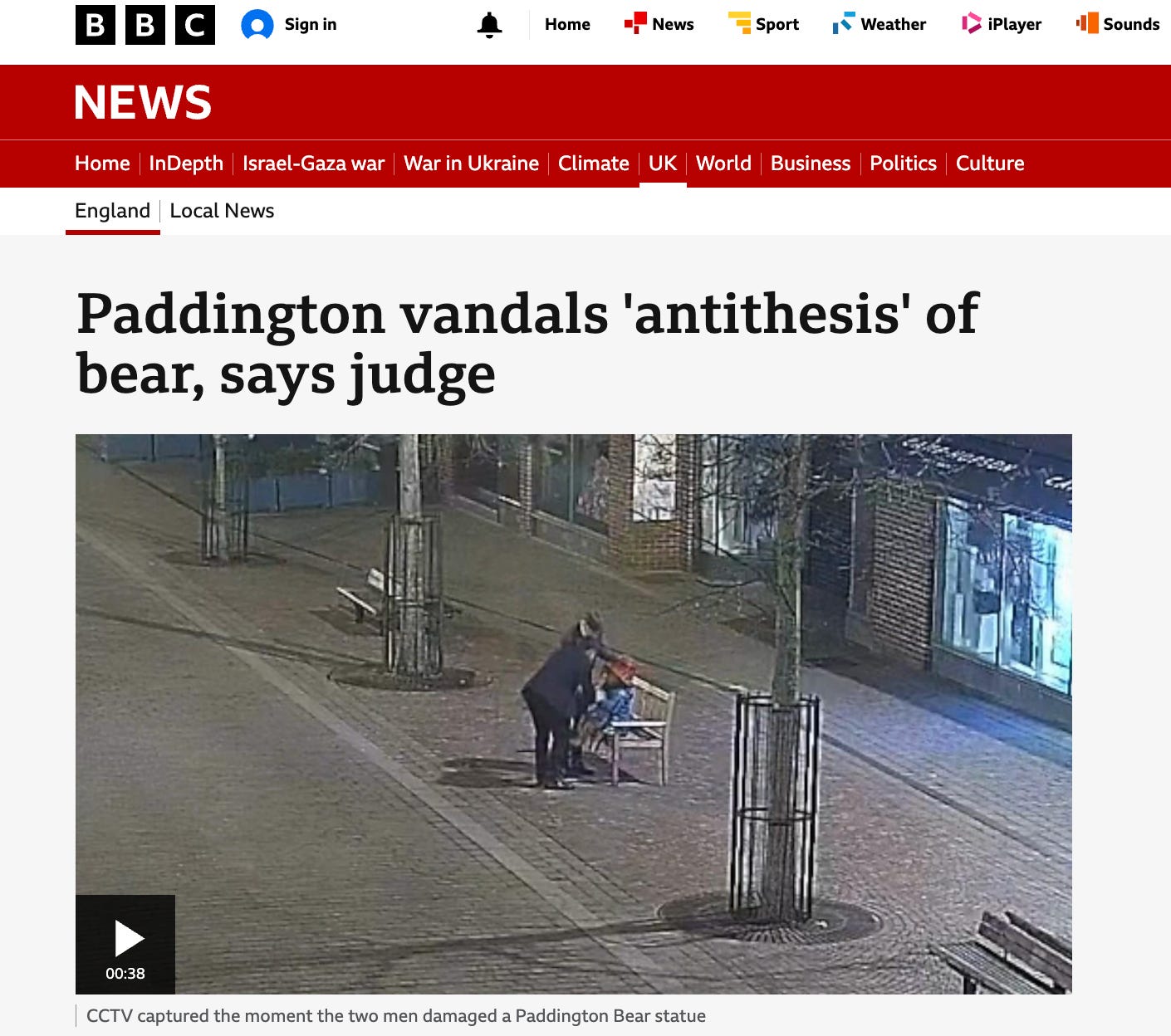
Hollywood was the first to taste a cupcake. He bit, smiled, looked briefly joyous, his eyes rolled back in his head and he fell to the floor. The others followed.
Thus began the Great Therapeutanisation. An end to all cares, all discomfort, all sorrow, all life.
Epilogue: fortune’s son
There are different versions of the Oedipus story, but this is one.
In a first prophecy, Laius, king of Thebes, is told by an oracle that he is fated to be killed by his son.
In a second prophecy, Oedipus, son of King Laius and Queen Jocasta, is told by an oracle that he is fated to kill his father and marry his mother.
In response to the first, Laius orders that his baby son be killed, but, unknown to him, he lives. Oedipus then grows up in the city of Corinth, where he is adopted by the king and queen, Polybus and Merope (sometimes called Periboea), thinking he is their child by birth. He’s then told the second prophecy and leaves his home to escape this crime. Oedipus travels to Thebes and on the way meets his real father King Laius on the road and kills him after a disagreement, not knowing who he is. Arriving in Thebes, he saves the city by solving the Riddle of the Sphinx. After delivering the newly kingless Thebes from its affliction, Oedipus is made king and marries the widowed queen, Jocasta, his mother, unwittingly fulfilling the prophecies. Before he discovers what he has done he thinks of himself as specially lucky, fortune’s son.
There are different ways of looking at this as well as different tellings, and there aren’t any Key Takeaways to stick in a PowerPoint, but—
Are we really who we think we are? Are we really doing what we think we’re doing? What are the second and third order consequences of our actions? Is there a tendency for us to make the things we are trying most to avoid in life happen through the very actions we are taking to avoid them?
So, this script becomes, who are we really, what are we actually doing, what are we most trying to avoid, and are we actually making it happen—as individuals, states, nations, civilisations?
For what it’s worth, I think the Paddington era in Great Britain may be drawing to a close, to be replaced by a harder aesthetic, who knows what.
Paul Fishman (Skelsmergh, December 2025)
The Destructor; the Traveller; Volguus Zildrohar; Lord of the Sebouillia.
I mean the book(s).
Whole peoples can hand over their adult functions to others, as with e.g. Athens and the Delian League and the United States and some of its allies.